Thursday, September 14, 2006
CBC News In Depth: School Shootings
CBC News In Depth: School Shootings The world is going crazy it seems. A few days ago, all the news would talk about was the trauma of 9/11 (01) and now we are hit with another trauma in the Canadian news. How do you make sense of these people that do massive.. well massacres? Columbine comes to mind... Montreal massacre, the shooting of the women... Crazy world we live in. Makes my job necessary.

Wednesday, September 06, 2006
We're pastoral care... we don't do those kind of things.
Yesterday, my colleagues and I were having lunch and one of them said "We're pastoral care. We don't do those things". I forget the context but I remember one of them laughed and said that should be our new motto. What those things might be we aren't sure, but we liked the irony, because we seem to do so much.
Later that day, I had 2 of my staff ask me 20 minutes apart, if I had lived with my husband before we got married. I replied, "in the words of one of my colleagues, 'we're pastoral care. We don't do those things." Good for a laugh, so every once in a while you may hear us say.. "we don't those things! We're pastoral care!"
Later that day, I had 2 of my staff ask me 20 minutes apart, if I had lived with my husband before we got married. I replied, "in the words of one of my colleagues, 'we're pastoral care. We don't do those things." Good for a laugh, so every once in a while you may hear us say.. "we don't those things! We're pastoral care!"
Tuesday, September 05, 2006
Hope for a better life
Today, I was sitting by the elevator waiting to go for lunch, when one of my former patients got off the elevator and told me that she was getting a transplant. They told her while she was on dialysis and so she wasn't prepared. Just showed up at the hospital with what she had and checked in. At first I wasn't sure what she said. I thought she was just there for short stay. That is common, I didn't think that she would be there for a transplant. I haven't seen her for a few months as she has dialysis at a different location now. So I walked her up the hall and we were escorted to a room right then. So when I left a few hours later, she was about to go to surgery for her transplant. I wonder what people go through with that. I mean, they spend months or years waiting for a transplant and when it happens.. are they really prepared?
So we talked about what she would go through. Was she nervous? Had a prayer and then I left. Her surgery was to take about 4-6 hours. So that'swhere she is now and I will see her in the morning. Usually, I don't know the people before the transplant. I meet them when they are admitted to the hospital for treatment or when they come as outpatients for dialysis. So this was a bit different for me even. Despite the transplant, there is not always a guarentee that the kidney will be okay, not be rejected.
There are two ways that kidney transplants occur; through living donors, or cadaveric. Because we can't plan on the cadaveric showing up when you need it, most transplants are through living donors -- family members or friends. There can be issues with both. We hope that the transplant takes, but when it doesn't I can imagine the guilt that some people feel. Having a person give up a kidney that was working for them. and now it doesn't work for any one. I can't imagine how hard it would be to face the other person.
Monday, September 04, 2006
Gifts in our lives...
I have a somewhat motley collection of friends. I met most of them at church, which is also where I met my husband (I'm still amazed at that!), and we have done many outings together. Formal outings organized as part of the church group that I am in, and informal ones too, such as hanging out at PNE or playing blitz. (The girls and I haven't done this for a while. I will have to organize a get-together or at least brunch to visit since the move ...)
I first came to Vancouver in November 2002 and joined in activities at my church pretty much right away. That is just how I am. I was a member of an organizer/leadership team for the social group that we have for our age group, but dropped out earlier this summer. With the wedding, becoming the secretary for the executive board of CAPPE BC, and starting my next level of certification, I decided that this year I really would scale down my extra activities. I have said that I would but this time I dropped from the leadership team. Partially because I was frustrated by the politics of the team as well. As you may know from social theory on groups, that the more people and characters you add to a group, the harder it may be to communicate effectively.
character roles : joker, rule-keeper, sloppy, defiant, worrier, peacemaker, self-pityer, apathetic, clever, devious, hypocritical, sports player, uncertain, outgoing, impatient, generous
When you have too many of the different characters, it can get messy.
The thing is that my husband is still in the leadership group and it is hard not to jump in with my traditional organizational skills and my desire to be invovled. The question is .. what is the point of a group? or activity? Some people are good at planning for the long-term (I am not one of these people) a go with the flow type person. This can be like at work. In the hospital, we spend our time focused on the one goal: helping our patients to be healthy, have good quality of life and all that. We do this from our perspectives/or bubbles. Hence, everyone has a different idea of what the end result should look like.
 Physio, dieticians, nurses, medical teams, pharmacists, and spiritual care all have their own way of looking at the situation and even though we use the same terminology about care, we may have very different meanings about how the "work" should be done. This is the frustration as there are many voices to listen to and depending on who yells the loudest, that is what the team will follow and some people are left feeling that they are shut out or given very little opportunity to demonstrate what they can offer to the patient.
Let me get back to what I was saying about my friends. I met most of them at church. Some I am closer to than others, some come and go, but in the end, they have given me a wonderful gift. I am "Kathryn" to them, not "Reverend", not "Chaplain", but just Kathryn. I am allowed to be myself when I am there... I am thought of or introduced as "This is Kathryn. Oh yeah, she works at the hospital as a chaplain." The fact that I am ordained as clergy, to which they all witnessed in October past is not really a big deal to them. I was not ordained when they met me, and I am not their chaplain. Not expected to have an official role with them. This is something that came about because of who they are, but also because I worked at it. I was training at a different school and when certain people in the area found out "where I was from", I was classiifed as "one of those". I did not want that here in this new city/province. And it has worked out well. While my church has ordained me, they set me "aside" to the work of chaplaincy. I am not required to "do work" in the church for them, but I will offer what I can. They free me to attend and give as I am able and to be fed by the Spirit, and fed socially. There are those in my church who give me special treatment because of my role, but not as many as if I had been living where I grew up. This is very freeing. It is a part of the psalmist statement "Be still and know that I am God" A lesson that I have struggled to learn. To be instead of to do. It is very hard in this society at times, due to expectations, but also due to personal expectations as well. A gift that many are not able to embrace.
Friday, September 01, 2006


Bruised ego
 Yesterday as I was on my home, and fell on the subway escalator near the bottom. I was so embarassed. I was wearing strappy shoes and one came off my foot, and the other was partially off. I fell flat on my butt and had scrapes and bruises up my right leg and right arm. People asked if I was okay, I said yes, I'm jsut wearing the wrong shoes for this. Just silly shoes.
Wednesday, August 30, 2006
Some times God puts you in the place where you are needed, even if you didn't want to be there...
Today was an odd day. It was one of those days where there was never a minute to rest. Crazy things happening. Today I was coming out of one of our offices and encountered staff from another department trying to help a man find a "pastor". He wanted pastoral care, was I pastoral care? Yes. Am I minister? Yes. Well he was told to talk to my other colleague, a male, who was away. Did he want to talk to a man? or would I do? Well... then he poured out this story about the past few days. He said he remarried because he was lonely, only to discover that his wife is not the woman he thought she was. Then he told me details of how she abuses him, verbally and physically. He has called hotlines for domestic abuse. There are shelters for battered women, but not ONE for men. He has been staying in a hostel for the past week. He began by saying that he had not been a man of faith but had recently returned to the faith. He just wanted someone to talk to and pray with him. He told me that he would return and tell me how it ended.
Yes I know that men get abused too. I think it is one of those other hidden occurences, like miscarriages, that people do not want to share with others. Pride, or just too painful to admit, I don't know.
Then I went back to eat my lunch that I had started an hour and half earlier. My boss shows up and looks at his watch. "How long have you been sitting here?" meaning that sometimes we linger a bit longer than normal and it WAS 2 p.m. "Well if you must know, I have been here for 15 minutes. It is just one of those days and I will probably only be here for 10 more while I finish my conversation with my colleague. Is that alright?" Yes I'm just kidding. He said.
I left that area to go check in a patient. Instead I spy another outpatient that I have not seen since February. She tells me that she is going to court tomorrow regarding the assault case against an ex-boyfriend. We catch up on the story, she tells me about the details of his arrest, how she has an alias because she does not want him to find her. Hurt her. And that she is going to court tomorrow because she wants to proove to him and herself that she is strong enough to face him.
This was my day. Sometimes God does lead you to places or people that you really would rather not deal with. But I know that if I don't do His leading, that I will miss out on awesome experiences with people and I won't be like Jonah. No whale for me.
Monday, August 28, 2006
Yesterday I went to a Jewish "unveiling" service for one of my patients. I took my husband and we met the family of the deceased, sister, brother, nephews, and those who were close to her. There was about 20 people there. I was the only one from the hospital. We gathered in the parking lot, visiting and introducing ourselves and how we knew P. After this, we began a long walk up the cemetary to the grave site. There was a brown cloth draped over the stone. The Rabbi began by the call to gather, and the Cantor also did his piece. While I did not know what he was saying, in Hebrew, it was familiar and beautiful. The Rabbi invited the sister/brothers to remove the cloth together and then they said the Mourner's prayer together.
Mourners: Yit-ga-dal ve-yit-ka-dash she-mey ra-ba
Be-al-ma div-ra chir-u-tey
Ve-yam-lich mal-chu-tey
Be-cha-yey-chon uv-yo-me-chon uv-cha-yey de-chol beyt yis-ra-el
Ba-a-ga-la u-viz-man ka-riv ve-im-ru a-men.
Be-al-ma div-ra chir-u-tey
Ve-yam-lich mal-chu-tey
Be-cha-yey-chon uv-yo-me-chon uv-cha-yey de-chol beyt yis-ra-el
Ba-a-ga-la u-viz-man ka-riv ve-im-ru a-men.
Mourners: Let God's name be made great and holy in the world that was created as God willed. May God complete the holy realm in your own lifetime, in your days, and in the days of all the house of Israel, quickly and soon. And say: Amen.
Congregation: Ye-hey she-mey ra-ba me-va-rach
le-a-lam ul-al-mey al-ma-ya.
le-a-lam ul-al-mey al-ma-ya.
Congregation: May God's great name be blessed, forever and as long as worlds endure.
Mourners: Yit-ba-rach ve-yish-ta-bach ve-yit-pa-ar ve-yit-ro-mam
ve-yit-na-sey
Ve-yit-ha-dar ve-yit-a-leh ve-yit-ha-lal she-mey de-kud-sha
Be-rich hu
Le-ela le-ela mi-kol bir-cha-ta
ve-shi-ra-ta tush-be-cha-ta
ve-ne-che-ma-ta da-a-mi-ran
be-al-ma
ve-im-ru a-men.
ve-yit-na-sey
Ve-yit-ha-dar ve-yit-a-leh ve-yit-ha-lal she-mey de-kud-sha
Be-rich hu
Le-ela le-ela mi-kol bir-cha-ta
ve-shi-ra-ta tush-be-cha-ta
ve-ne-che-ma-ta da-a-mi-ran
be-al-ma
ve-im-ru a-men.
Mourners: May it be blessed, and praised, and glorified, and held in honor, viewed with awe, embellished, and revered; and may the blessed name of holiness be hailed, though it be higher by far than all the blessings, songs, praises, and consolations that we utter in this world. And say: Amen.
Ye-hey she-la-ma ra-ba min
she-ma-ya
Ve-cha-yim a-ley-nu ve-al kol
yis-ra-el ve-im-ru a-men.
O-seh sha-lom bim-ro-mav
hu ya-a-seh sha-lom a-ley-nu
ve-al kol yis-ra-el
ve-al kol yosh-vey tevel ve-im-ru amen.
she-ma-ya
Ve-cha-yim a-ley-nu ve-al kol
yis-ra-el ve-im-ru a-men.
O-seh sha-lom bim-ro-mav
hu ya-a-seh sha-lom a-ley-nu
ve-al kol yis-ra-el
ve-al kol yosh-vey tevel ve-im-ru amen.
May Heaven grant a universal peace, and life for us, and for all Israel. And say: Amen.
May the one who creates harmony above, make peace for us and for all Israel, and for all who dwell on earth. And say: Amen
May the one who creates harmony above, make peace for us and for all Israel, and for all who dwell on earth. And say: Amen
My husband later said that while the service was different, it was good because it gave a nice summing of the person.. a nice way to say good-bye. In our North American traditions, our Christian traditions, we will have the funeral/memorial service about a week after the death, but there is usually nothing more. Where I grew up, it is more common to see a memorial, with picture, in the paper about a year or many years after the death of the loved one. My mother told me she did not want that done for her. It can be somewhat tacky. But in a sense, there is nothing for those of us left. The funeral service happens... and that is it. There is no real mention or understanding of grief. People are expected to just "move on" or get over it. We see this in soap operas. A character dies and there is no mention of them again, or it is dragged out, boring the audience. Grief is not something that people wish to think about, but it is a part of life. I liked the unveiling. It was helpful for me as I was not able to attend the service at the time of her death, and I think it was helpful for that family. To remember the life of P. and her passion for living even up to the end.
My relationship with P. was short compared with her long life, but she inspired me to learn more about the Jewish tradition. I had previously liked to read books by Anita Diamant, which are novels and informative books about Jewish life. And this has inspired me to read about other traditions as well. Sikh, Hindu, Buddhist and Aboriginal spirituality.
Wednesday, August 23, 2006
I have recently learned the joys of commuting to work. On the subway, I have time to read so I have read one of the free papers. The latest issue for debate is as followed:
Visitors find Vancouverites cold
By MATT KIELTYKA, 24 HOURS
Vancouver's unique culture may go a long way in explaining why so many visitors see Vancouverites as uncaring.
International student co-ordinator at UBC's International House, Regina Lyakhovetska, says many students get the cold shoulder from locals.
"Students say people are very polite, but that does not mean there are a lot of people willing to help," said Lyakhovetska. "They say Vancouverites are more closed to themselves and it is hard to get to know them."
The feeling is amplified when you're new to the country and trying to adapt to life in Vancouver, she said.
Joe Fardell, president of Tourism Calgary, said Vancouver has a reputation for not being the friendliest city in the country.
"It's friendly, but at the same time it's not as friendly as other cities when it comes to tourism," he said. "Compared to smaller cities like Halifax, Vancouver and Toronto just aren't as friendly."
Fardell said people in Vancouver are so used to having tourists wandering around the city they don't go out of their way to help.
"It's just a different culture, they expect tourists to do their own thing," he said.
Not surprisingly, Fardell rates Calgary as the friendliest city in Canada, but he says it's an honest answer.
"I haven't been here that long and I've lived all over the country, but Calgary is No. 1," he said. "As for Vancouver, maybe top five."
When I first got here to Vancouver, I said to one of my girlfriends from back home, that the people were friendly but something was missing... the warmth. I don't know if I think that Vancouverites aren't friendly, but I thought that the "lack of warmth" was due to the "big city" living/mentality. One letter to the editor suggested that we keep to ourselves because we are tired of being harassed by panhandlers. I wonder if that is really it...

Friday, July 28, 2006
Things people say ...
Today I was talking to a patient who is dealing with the death of a family member. There are cultural differences as the family is East Indian. So I was asking about the different traditions and what is normally done, or expected, and what they are doing that is different from their cultural norms due to the circumstances related to the death. In listening to the person talking about all the family dynamics that go along with this and the expectations that go with this situtation, I was reminded of some questions people ask me when I give talks/seminars about my work in healthcare. My areas of specialty have been dementia, grief related to chronic loss and grief related to death. So inevitably I get asked what to say to grieving people. How can we be pastoral to those in grief? I remember starting with "well, here's what not to say" before I could come up with what to say.
Often people mean well, but say things that aren't appropriate, or aren't helpful to the grieving person(s). I have always hated when people say "S/he is in a better place. .. is not suffering." and the clincher "It was God's Will." I shudder at that one. I will admit. I used to be an offender and use these exact phrases ... but since I took a course in my training where we used a book call "The Will of God" I have learned what that really means. The Will of God.
For centuries, the human mind has sought to understand the meaning and purpose of existence. How did the world/universe come to be? Why? What are we to do here? What is the meaning of life? of suffering?Throughout the years, humanity has answered these questions with various theories.. Let's look at the question of meaning and purpose of life, and the place that suffering/death have in it. This could go anywhere, I know. But I will look at it from a theological perspective as pertains to the concept of Will of God put forth in Weatherhead's writings.
He basically says that God did not intend for these "things" to happen. That this is not the world that He created and thus this is not how we were meant to live. Is God in control now? Yes. Why doesn't He just fix it then? Wave the magic wand and make it all different...? Because that would go against the laws set forth in Creation.
In the words of another writer
Dr. Weatherhead separated God's will into three parts: 1) Intentional; 2) Circumstantial, and 3) Ultimate (ICU).
1. God's INTENTIONAL WILL is for our good. This is Adam and Eve in the Garden. When God created Adam and Eve, it was His intention that they live forever and be happy. But they sinned and were expelled from Paradise.
2. His CIRCUMSTANTIAL WILL is because of the circumstances in our lives. It is within this will that we find God's permissive will. This is Jesus in the Garden of Gethsemane. This is Job 42:2: "I know (faith) that you can do all things; no plan of yours can be thwarted."; It is the all of Romans 8:28, that glorious rod and staff of the grieving: "We know that God causes all things to work together for good to those who love God, to those who are called according to His purpose." I know (wisdom) I can (possibility) do (accomplishment) all things whatsoever He asks!
3. His ULTIMATE WILL is for His glory and our good. This is Christ's resurrection and our resurrection. It is us all in the New Earth.
The wonderful revelation as I read this book is that God's intentional will finally becomes His ultimate will, even as we go through the circumstances of our life. Dr. Weatherhead gives the example of the young man in London whose intention was to be an architect but, because the war changed his circumstances, he joined the Army. At the time this was the honorable course. The young man could not control the evil circumstances of Hitler and his desire to conquer the world, but he could control his reaction to them.
As I read the book I was comforted in the fact that nothing falls outside the circle of Divine Providence:
1) the knowledge of God embraces it;
2) His power is sovereign over it;
3) His mercy holds it creatively.The key here is God's goodness. The parent does not will evil for his or her child; neither would a perfect God will evil for His children. At the time Dr. Weatherhead gave his talks, the people in England needed desperately to know that there was a living and loving God in spite of the horror going on. We need to understand God's will and its components before we tell the person prostrate with grief that "It's God's will." As I read this incredible treatise, I viewed us as being in God's ICU unit and God taking care of us as only He can do, no matter what our circumstances.
From reading this book by Weatherhead, it changed my thinking about "will of God." I was taught as a child that God is in control. I was also told about fairies, magic, and superheroes. I thought God was like a superhero, trying to save His doomed Creation from messing up even more of their precious existence. Irony is that God is in control but not the way we think He is... I will write more on this... (when my wedding is over!!)
Thursday, July 27, 2006
Change and waiting in the "Space in Between"
There is a saying that is something to the effect "there are only 2 sure things in life; death and taxes." Or something like that... But I think there is another one that says " the only sure thing about life is change". Change is inevitable. It is a part of life. Without change, we grow bored, and unchallenged. Change is good. That's why we move the furniture, or go to another room/place. But too much change, especially all at once is not good
This involves some degree of stress. Stress is healthy, and stress is unhealthy. Depends on what kind you get, the type of personality you have and how you cope with stress. Me... I don't cope will with extreme amounts of stress. (In case you haven't noticed.) I tend to get sick. When I first got this job, I moved across the country to a new city, a new job, a new community, ... a new life. I was only here in Vancouver for 3 weeks, and I got sick. So sick that I had to stay home for the third week of my job. And every so often, when life /work got heavy.. I would get sick. A cold, the flu, strep... With all of this change and stress, I wonder if it isn't a 'grief reaction'. In the case of what I just described,I had lost my home, community, support group, security of the job that I knew, .. so that is a lot of losses.. cumulative. I have a patient who is not doing so great. He was described as being a "bit down". Well let's figure out why. He's had numerous medical issues, heart issues, stroke, fractures, and now he is told that his functioning has declined so much so that he is not allowed/able to return home to the place where he was living. I am sure that when a psychiatrist goes in and does the scale to measure depression, they will say that "yes he is depressed". Often what is missed is that is a normal part of a grief reaction, and not just that the patient needs what we call " a happy pill". Sometimes people need to be depressed. It is hard to face changes and it is harder when you don't have time to adjust to old ones before new ones are added.
Change is inevitable... and it is how you approach/handle change that counts. Well. Once again, there seems to be extreme amount of change/stress in my life. I will get married in 9 days. I will then move the rest of my stuff (futon, TV, VCR, computer, clothes and dishes) from my apartment of 3 years to a townhouse. I will learn the joys and annoyances of living with my new spouse. He will learn the joys and annoyances of living with me. I will go away on a honeymoon trip and return to a house crammed with wedding presents and freshly renovated rooms. I will return to work after 3 weeks of being away and scramble to make sense of what has gone on while I was away -- with my patients, staff and colleagues.
So I take a breath.. and I think about all the change that has occured in my short time here in Vancouver. Just this past year has been monumental with some major changes -- losses and transitions. And I remember that there is always a constant regardless of the situation. God says I AM the same, yesterday, today and tomorrow. I will never leave you nor forsake you..
I was regretting the past
And fearing the future.
Suddenly my LORD was speaking,
“My name is I AM”.
He paused.
I waited. He continued.
“When you live in the past
with its mistakes and regrets, it is hard. I am not there.
My name is not I WAS.
When you live in the future,
With its problems and fears,
it is hard. I am not there.
My name is not I WILL BE.
When you live in this moment,
it is not hard. I am here.
My name is I AM.
Helen Mallancott.Irony is that we spend our lives waiting. Waiting for that event, this job, this illness to pass, graduation, moving to new place, .. we are always waiting for the next good thing. In the meantime, we exist in the "space in between" the good thing we had and the good thing that we want. That is what life is .. waiting for the fulfillment of God's Kingdom in our lives. Waiting til we see God at the throne on Judgement day, waiting till we begin the eternal journey of living... in the meantime, we anticipate the change that till come, obsess about the changes that did occur and that changes that are happening now. I have been waiting for this day.. my wedding day for 7 months since the engagement.. but I have anticipated it for my whole life. I hope that I have as much excitement and hope about other events to come as I continute to wait and exist in this "space in between",
Friday, July 21, 2006
Sick as a dog...
 I don't deal with stress very well in case you don't realize. I am at home from work again because once again I sound like a dying frog. Add to that, the fact that it ts like 30 something degrees out. It is not easy to sleep, or pack, or clean or do anything except be sick. Sit on the couch like a bump and be sick. On a Friday. When it is bright and sunny outside. Sick at home with too many things to o and not enough energy to do them....
Thursday, July 20, 2006
This is an article published in today's edition of the Vancouver Sun. It relates to my renal unit and the work that I do. It tells a bit about what the donors go through with the process of donating a kidney. There are more live donor transplants then cadaveric (deceased) donors. Relatives or friends get tired of seeing their loved one suffering through the process and pain of dialysis that they agree to be tested and give a kidney. There are often guilt issues that result with this process. It is not always a guarantee that the transplant will be successful, as you read below, and I wonder about how the persons involved feel about this. How the recipient feels, putting their hope on this transplant only to have it not work and now there are 2 people that don't have working kidneys...(the donor has given up a working kidney and now only has one), and the guilt they feel. The disappointment the recipient has, or the anger the donor might feel. Often the persons donating are family or known to each other, but it is rare that there may be an anonymous donor.
The article is talking about social justice. The fact that the government will focus on giving free drugs to addicts, but won't assist with live giving operations... Irony indeed.
Kidney donor puts job on hold to help chum
Woman could benefit from new plan that helps with costs of donating
Glenn Bohn, Vancouver Sun
Published: Thursday, July 20, 2006
Brenda Cote of Burnaby found a friend who is willing to donate the kidney that Cote desperately needs to stay alive-Jo Wright, a self-described "tough chick" who lives in the West Kootenay town of Nelson, is willing to sacrifice one of her two kidneys, but she doesn't think it's right that she should also have to foot the cost for lost wages, travel expenses and other bills. A new $300,000-a-year program announced Wednesday by the Kidney Foundation of Canada and the BC Transplant Society is aimed at helping Wright and other live donors of kidneys or livers.The three-year B.C. pilot program will compensate donors for reasonable out-of-pocket travel and accommodation costs, as well as lost wages. The two non-profit groups say the initiative makes B.C. the first jurisdiction in Canada and North America to reimburse living donors for expenses related to organ donations. A living donor faces big expenses in a pricey place like Vancouver, where all organ transplants in B.C. are performed. And the sacrifice doesn't end after the operation. Living kidney donors may have to stop working for six to eight weeks; the recovery time for liver donors is longer, usually eight to 12 weeks.Wright, who will be eligible for compensation under the new program, has already put out money for her altruistic offer, even though she hasn't gone into an operation room and doesn't yet know when that might happen."I'm putting my job on hold and raising two teenagers on my own, but I'm determined not to worry about the money and just focus on the fact that I may be able to help," Wright said during a telephone interview from Nelson. Last week, Wright went to Vancouver for the final round of tests needed to determine whether she would be a suitable donor for her friend. Wright drove to Vancouver instead of flying to save money, but estimates she's out about $500 because of costs and lost wages for the three days of work she missed. She left Nelson in the evening and drove at night, to keep the number of missed work days to a minimum."There's been a little bit of wear and tear but I'm a tough chick or I wouldn't take this on," Wright said.Then she made a pointed reference to a Vancouver medical study that offers free heroin to selected addicts: "The thing that really burned my britches is that I can go to Vancouver and get a free shot of heroin, but I can't get help to take someone off a medical dependency list."Cote, 43, had a kidney transplant in 1987 and subsequently gave birth to her daughter Erin, now 13.But she's been back on a life-saving kidney dialysis machine for several years and she needs another kidney transplant.Cote said Wright was willing to donate a kidney last November but she had just started a new job and didn't have the money at that time to go to Vancouver and take time off after the operation. "She would have come in a heartbeat, if she was able," said Cote, who has been on an official list for a transplant for two years.The Living Donor Expense Reimbursement Program was outlined Wednesday at a Vancouver news conference. Half of the $300,000 annual budget for the three-year pilot program comes from the B.C. government, through the Provincial Health Services Authority, which is matching contributions from pharmaceutical companies. The province says it expects to recoup its $150,000 contribution within five years because additional live kidney transplants should reduce dialysis costs.
gbohn@png.canwest.com- -
-The gift of life
Some facts about kidney transplants in B.C.-
The first living donor kidney transplant in B.C. occurred in 1976.- Since then, there have been 862 living donor transplants.
- Each year, there are twice as many living donor transplants as transplants from deceased donors.- Almost 300 B.C. residents are now waiting for a kidney transplant.
- Depending on blood type, the wait for a transplant from a deceased donor could be as long as eight to 10 years.
- On average, about five or six per cent of the people in need of a transplant die while they are on the waiting list.
Sources: BC Transplant Society (www.transplant.bc.ca) and Kidney Foundation of Canada (www.kidney.ca)
Wednesday, July 19, 2006
Things we don't like to think about until we have to .. but then it is usually too late.

I will be the first to admit guilt..that while this comes up from time to time, I do not like to think about this either. I hope that after sweetie and I are settled into married life, that when we look at the important papers, this will be one of them. Advanced Health directives or DNR orders or living wills, as people call them, are important for everyone. But no one wants to write one. It's that "what if" that no one really wants to think about... like "what if ... I had an amputation, what if I lost my job, what if my spouse left me, what if I was told I had a fatal diagnosis and there was no cure...." No one really wants to face this, until we do. It is things like a funeral, or some other story in the news that sparks our thoughts on "that which we do not wish to think about ..." . Sometimes it is easy to turn off the TV and think about something else, and at other times we can't. The Terry Schiavo case sparked great debate on a national and international level. Where I work in the hospital I see/hear horror stories of 70 or 90 year old patients brought in yet again, and because there is no health directive, they are given CPR (a procedure that can be long and actually breaks ribs..) and are intubated. "Is this what Grandma/mom wants?" To be kept alive on a respirator, and when/if she wakes up will have to go through pain and struggle through rehab. Would she want this? Maybe she does.
In the end, I think it comes down to one question. At what point, do I think that my quality of life will suffer? How much pain is too much? At what point do I stop enjoying my life?
There are different levels of intervention. i.e comfort care only, intermediate care, or full treatment. There's even different ones if you are in the community versus a facility.
So if someone does not have an advance directive, and let's say they have a bad stroke or a car accident and it doesn't look very good for the outcome, the family is often asked what to do. In ICU, this often is the case. We (medical team) aren't asking you (family) to "pull the plug". In the end, it is the medical team that determines the prognosis and the course of treatment. But if it looks good for recovery but the patient will have severe to moderate side effects/trauma, it may be that the individual would not want to live this way. Although there is nothing on paper, someone might know that this is what s/he wants. Or it may be that family are in too much shock to process what is going on. The written directive is a guide to medical team, is a way for a person to speak when they verbally aren't able to.
True, there is always a chance that things change. That the person thought one thing but when a trauma hits they change their minds. Like my lady who died in February. She was a very strong personality, but when it came down to it. She said "you know, despite what I seem to say.. I have decided that this pain is too great for me. That living this life of dialysis every other days, not sleeping in a bed because I'm in pain... I've decided enough is enough. This is no life for me." Or when you decide you would rather not be resuscitated, you may have the "near-death" experience and decide that you aren't ready to meet your Maker. It is possible, but then, isn't it still better to think about these things before you really have to.. and then it is too late?
Thursday, July 13, 2006
Words we say ..
The "How are you?" question has been a challenge for my ministry. It is a question that rolls off my tongue as I am a Maritimer (Eastern Canada). We ask "Hi. how are you?" as a greeting. Sometimes, it is in passing, sometimes in concern. I was reading another blog. It brought to mind one of the first clients/residents I had in my Clinical chaplaincy training. One of my residents said to me..."do you really want to know?" I remember telling her, "of course I do, I wouldn't ask if I didn't mean it". That was a learning moment for me. To learn the value of the words we say.
Wednesday, July 12, 2006
Themes that surface...
Have you ever been going through your daily life and you're struck by this realization? There are themes that repeat. Subtle at first and then they yell at you in the face. I wonder about these things... is it that your journey of life, that is just what happens to surface.. what you are focused on? or is it because God says you need to learn this lesson? Have you ever had to learn a "lesson" more than once? .. because you didn't "get it" the first time. That used to happen a lot when I was younger, and I would look up at the sky and say "Sorry God. Did it again didn't I? I'll try to do better."
Well the theme that seems to come up in my work right now is family dynamics. Yesterday I listened to a woman tell me that her family doesn't care about her. They are too busy with their lives and family isn't important to them. It is hard to know what to say as there is obviously conflicting ideas of living. She is "Old World" and cooked for her family and looked after them. Doesn't understand why they don't have the same ethic. I wonder how much is that she is lonely as her husband has died and her identity was likely looking after her family, and how much is that she isn't able to let go and let her children live their lives. That is a hard thing about being a parent.. family. Letting go and letting the children live their lives and make their own mistakes.
Today, I heard another longtime client was talking about her children. One of them blames her for everything that is wrong and the other has drug problems showing up only when it is convenient or when they can get money. It is hard to throw a child out of the house, but sometimes necessary. There are also cultural issues that I wonder about as well. In every generation, we are considered a product of the generation past. You have likely heard or said "I hope I never become my parent" and then later we hear something come out of our mouth or see ourselves do something and shriek in horror.
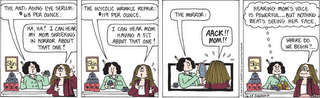
The thing about hearing the "story" or concerns of one's family is I am only hearing one side. I don't know what the "family" experience is. I asked the second person about possible responsibility that she may have in the actions/inactions of her family. She is willing to concede some of her part of this story. The irony is that is so easy to critique when one is not involved.. but when it is YOUR family or situation, that is harder. When I heard the story yesterday, I felt guilt that I do not write to my grandparents enough, and wondered at how my family sees my function/role in the family.
It is a life-long struggle. We seek to belong and when we are secure, we seek to find our own identity away from our structured environment. That is what we do as children. We develop attachment to our parents and we are affected by the type of attachment we have. Love is an essential need for any child. A child needs to feel loved and cared for to feel secure. If they do not form attachments or felt secure, they are affected in their development This is according to Erik Erikson's theory of development. He posited that every stage is affected by the previous one. Once we have gained that security, we attempt to break from that to determine/find our own way. This is typically adolescence, early 20's. The problem is, that as parents, it is hard to watch our children make mistakes and suffer failure. We want to protect them. But sometimes we over do and the child isn't able to develop a sense of autonomy or has unhealthy dependence on the parent. It is a complex web.. and hard to balance. When to pull and when to let go. So many times, I want to tell my patients what I think they should do.. my opinion. But I can't do this due to the type of counseling we offer. We can't say as chaplains or pastoral care professionals that we think they are being idiots and we wish that they would smarten up. But we can love them and help as we are able. Sometimes we have to let them fail before they succeed. And sometimes it is easier to say what we think, then to do.
Thursday, July 06, 2006
Image.. is it so important? Part 2
When I was first told that I was going to be a chaplain in a nursing home, I said No thanks. My idea of a chaplain was
that guy from MASH. No thanks, did not need to be associated with the blumbling character like him. Since moving here from the East Coast to the West Coast, I have had to deal with changes and different ideas of how things are done, but image is one thing I can't get over. It is bad enough that I have a hard time to find clothes that fit. Everything seems to be made for women that are size 0-2, which I am not. But the office places are not as business oriented as I am used to. Here, everyone is so casual. Even at church. People show up in sandals, open toe shoes, t-shirts, jeans, shorts, you name it. I have often been asked if I am one of the doctors because doctors do not tend to dress in suits as they used to. It is up to individual taste/style nowadays. It is very rare that I see a man wearing a tie at work. When I do, it is usually an older man who is likely a doctor.
When I introduce my self as chaplain, as this is the most common word/understanding, I suppose that patients aren't expecting me to look as I do. I am young, I am blond, and I don't look like a nun.
No, instead I am mistaken for medical or administrative personnel. I suppose that one would assume in a Catholic facility that one would be visited by a nun. That is if you understand the tradition. But instead
they get me and my colleagues.I tend to dress more formally. And my
patients have expectations I guess, of what a "chaplain"
should look like, act like, etc. So when I walk in the room dressed in
my usual style ..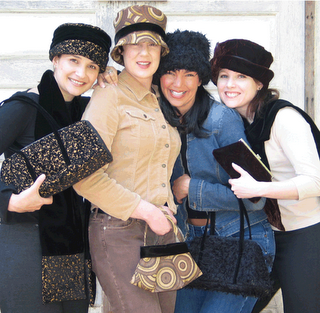
Well they are a little surprised that this is what the chaplain, pastoral care worker looks like.. Well you know what? We are all God's people, just that there are certain expectations with certain positions. How one should act, dress or talk... we have certain expectations about what a doctor is to do, what a sales clerk is to do.. role responsibility is understood, but it is difficult sometimes to gauge as the standards change. In my line of work, it is not known what an individual's experience with organized religion has been and hence there are certain expectations about what the "religious" or "holy person" is supposed to be like. Not easy when you don't fit the mold. Some people embrace my "uniqueness" while others are wary. This still a work in progress. I am basically telling my staff and my patients that I am as God made me, and this is a good thing. God loves us as we are, but we must love and own that too. Still working on this.. but loving who I have become.
that guy from MASH. No thanks, did not need to be associated with the blumbling character like him. Since moving here from the East Coast to the West Coast, I have had to deal with changes and different ideas of how things are done,
 but image is one thing I can't get over. It is bad enough that I have a hard time to find clothes that fit. Everything seems to be made for women that are size 0-2, which I am not. But the office places are not as business oriented as I am used to. Here, everyone is so casual. Even at church. People show up in sandals, open toe shoes, t-shirts, jeans, shorts, you name it. I have often been asked if I am one of the doctors because doctors do not tend to dress in suits as they used to. It is up to individual taste/style nowadays. It is very rare that I see a man wearing a tie at work. When I do, it is usually an older man who is likely a doctor.
When I introduce my self as chaplain, as this is the most common word/understanding, I suppose that patients aren't expecting me to look as I do. I am young, I am blond, and I don't look like a nun.

No, instead I am mistaken for medical or administrative personnel. I suppose that one would assume in a Catholic facility that one would be visited by a nun. That is if you understand the tradition. But instead
they get me and my colleagues.I tend to dress more formally.
 And my
patients have expectations I guess, of what a "chaplain"
should look like, act like, etc. So when I walk in the room dressed in
my usual style ..

Well they are a little surprised that this is what the chaplain, pastoral care worker looks like.. Well you know what? We are all God's people, just that there are certain expectations with certain positions. How one should act, dress or talk... we have certain expectations about what a doctor is to do, what a sales clerk is to do.. role responsibility is understood, but it is difficult sometimes to gauge as the standards change. In my line of work, it is not known what an individual's experience with organized religion has been and hence there are certain expectations about what the "religious" or "holy person" is supposed to be like. Not easy when you don't fit the mold. Some people embrace my "uniqueness" while others are wary. This still a work in progress. I am basically telling my staff and my patients that I am as God made me, and this is a good thing. God loves us as we are, but we must love and own that too. Still working on this.. but loving who I have become.
Saturday, July 01, 2006
Image .. is it so important.. ? Part 1
So let's talk about image... What is a "pastoral image"? or "pastoral identity"? One definition is
Pastoral Identity - Increased self-awareness and participation in the community process of pastoral participation in the community process of pastoral identity formation through sharing of personal stories
Pastoral identity is largely wrapped up in the issue of authority. I'm not talking about the "do as I say" authority, but rather the authority given by the education or position that one holds. We given certain person authority simply on the merit of their position.. doctors, lawyers, mothers, police, teachers.. and the list goes on. The authority of that person is partly earned, and sometimes given. Nowadays, it seems that our society has little respect for various positions due to the problems with systems. Healthcare is failing, education/class room sizes are suffering, the law has good days and bad.. the same goes for the Church.
The Church or faith traditions don't seem to hold the same respect as they did in days gone by. True, change is inevitable and necessary. The Church has failed to change with the times and in some cases has been the leader in establishing change. (Unfortunately, these innovations were taken over and "owned" by other groups.) One such "innovation" or change that I heard put forth by the Church occurred in my faith based hospital. It used to be operated by nuns. It was the nuns that decided to take in and treat the patients afflicted by AIDS. It was also our hospital that took in the SARS victims as well. Taking the "untouchables". But I'm getting into a new topic.
Let me start with my first introduction to the word "pastoral identity". My first year of my Masters degree was a year of liberation for me in many ways. I was free from scrutiny of family and others who might "report" my actions to my parents. We laugh about it now, but my friends will remind me that I used to dress unbecoming of the profession to which I aspired. I believe one of my guy friends said that when he first saw me, he wondered if "that girl knew where she was. This was the seminary... and you dressed like.." like I going to the bar, or clubbing. One of my colleagues, (we went to the seminary together and later work in the same office. She spoke at my ordination and will officiate at my wedding) said it best. "You looked like a hooker." Our CPE supervisor tried for 2 years to pound into me what pastoral identity meant, and the impact that it had on my ministry. As far as I was concerned, I was still me. Why did I have to put on a false self to minister? Why couldn't I be myself and still be a minister?
Of course we know the answer to that. You can be yourself. You have to learn to censor your full thoughts.. There are some things that cannot be said or done, especially nowadays with the whole sexual harassment laws, scandals and all. ANYthing can be miscontrued and people, even the Church, get sued.
Now that I am ordained. There is even more scrutiny of my behavior. People that I work with, attend church with, people I don't even know will feel it their duty to point out my shortcomings. The fact that I am a Baptist minister working in a Catholic organization, the fact that I am in the sometimes misunderstood profession of chaplaincy, the fact that I am a woman and not allowed to call myself a Chaplain, and the fact that I am me, I don't fit the stereotypes of "what a chaplain is supposed to be like... all of these things frustrate me immensely. Some days it is hard to forget the politics and just do my work. (breathe)
There are times when I know that my presence is valued by my patients. But I sometimes wonder if they understand it all. Am I there as chaplain..Pastorall presence to them, representing God, or am I there as friend? Lines tend to blur when you do the indepth work of pastoral care/counseling. There are funny times/moments and not so fun moments;when I have to talk to people about dying, be it their loved one or their own death, when I meet patients who are entering the world of dialysis and organ failure, when I talk to the man who feels his life when end because the medical team has to amputate toes, or limbs to save their life. The irony of some of the relationships established with patients is that I am the chaplain, I bring God to their life, but often these people are not of the same faith tradition. I had a Jewish lady that was in hospital for a long time. She would get upset if I did not come at lest every second day to see her.
I had an Aboriginal woman who was an ecclecticc mix of Anglican, Buddhist and nativespiritualityy wrapped into one. When I told her that I was to be ordained as a minister in the Baptist Church, she laughed!! Belly aching, loud laugh. Everyone in the dialysis room stared at us. I was mortified!
"YOU? A minister? OH that makes me laugh." she said. "Yes I see that" I replied. "Why is that so hard to believe?" Her response was "Honey, you don't fit the bill. You don't look like one, you don't act like one, and you certainly don't TALK like one." "I can fix that if you would like." I told her. "God, no!" She gave me this look like death. "oh no," she says. "You do that, and I won't talk to you anymore. You are real, you see. Not stuffy and pretentious like some of them ministers I meet." I looked at her.. "so this is a good thing for you? that I am not what you thought a chaplain should be.." "oh yes, oh yes honey. You better believe it". She then went on to tell me of her bad experiences with the Church. I still don't know what she really thought of my ministry. I did walk with her throughout her time with us until her death earlier this year, but I will always wonder what she really thought.
In the end, I would like to pose the question. How much of the pastoral identity has to be owned and how much has to be earned?Thursday, June 29, 2006
Demi did it better ...

Oh my goodness.. What are celebrities thinking sometimes? Britney is on the cover of a magazine au natural while complaining to paparazzi to leave her family alone. Pul...leeze. If you do things and you are in the public eye, expect scrutiny. Despite the fact that it caused controversy even then, I prefer Demi's cover.

Subscribe to:
Posts (Atom)


